
Cricket is considered England’s gift to the sporting world. The earliest known mention of the game dates back to 1598 in Guildford, Surrey. By the 17th century, cricket had grown into a serious and competitive sport across England.
England is the place where cricket was properly shaped and organised. The rules of the game were written here, and its traditions were built over time. The Marylebone Cricket Club (MCC) played a key role in creating and maintaining these laws, giving England a central role in cricket’s development.
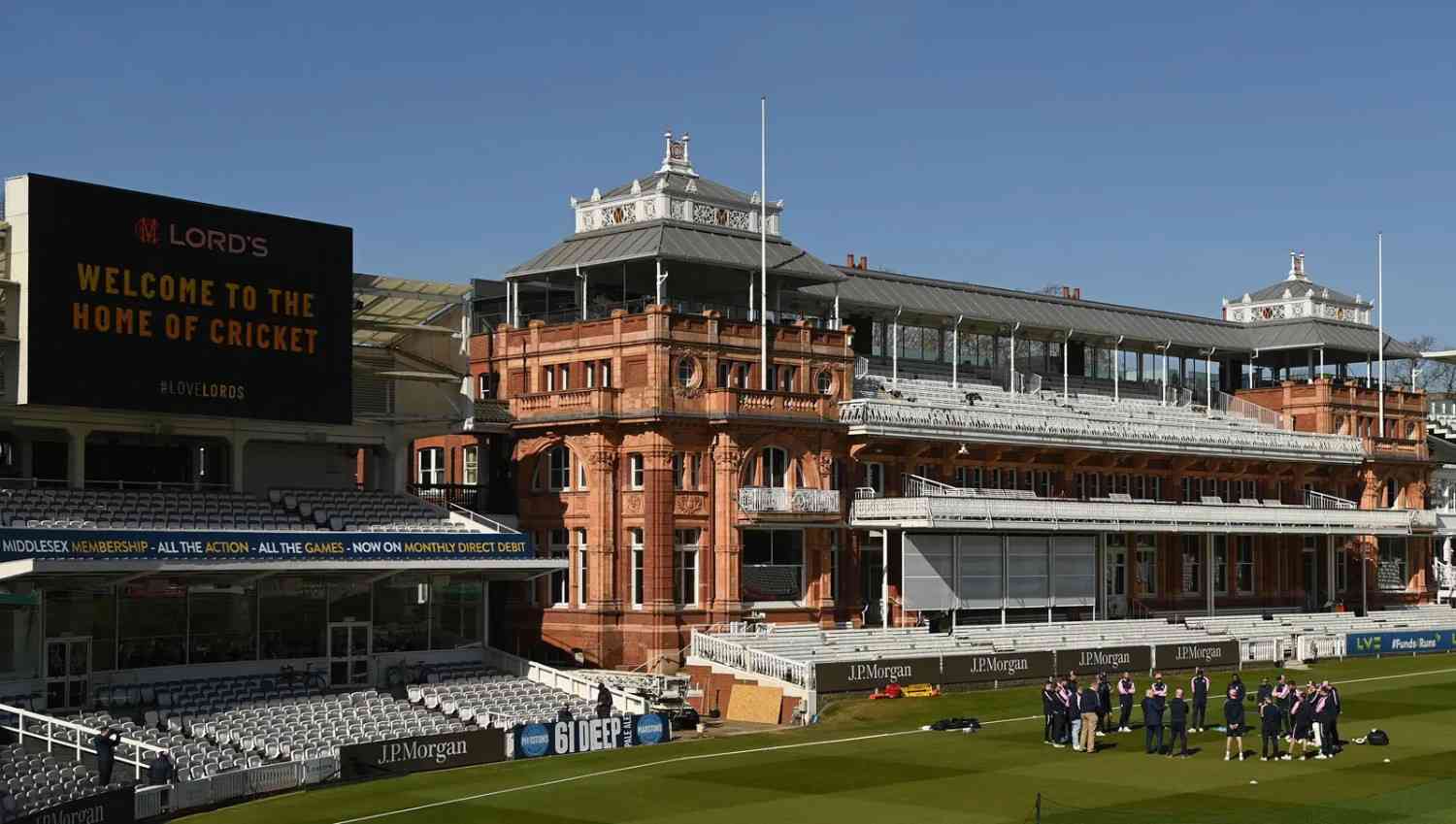
The sport’s spiritual home is Lord’s Cricket Ground, located in St John’s Wood, London. With a seating capacity of around 28,500, this historic ground has been at the heart of cricket for over 200 years. Even today, it is known as the most respected and iconic venue in the cricketing world.
How Lord’s Became the Home of Cricket
The story of Lord’s Cricket Ground begins with Thomas Lord, a man from Yorkshire. He was a smart businessman and also loved cricket. In 1787, he opened his first cricket ground in Dorset Square, Marylebone. This ground was primarily built for wealthy cricket lovers, who later became founding members of the Marylebone Cricket Club (MCC).
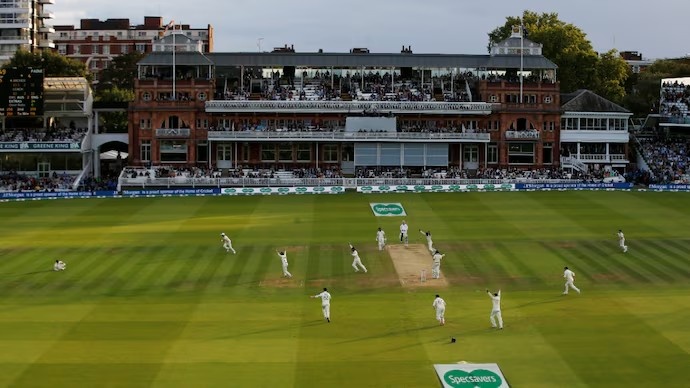
When his lease ended, Thomas Lord had to move the ground. In 1811, he shifted everything to the North Bank in Regent’s Park. It is believed that he even moved the turf very carefully. However, after two years, he faced another problem. The building of Regent’s Canal created serious issues, forcing him to move again.
Finally, on 22 June 1814, Lord’s was opened at St John’s Wood, where it still stands today. The first match played at the new ground was between the Marylebone Cricket Club and the Hertfordshire teams, marking the beginning of a legendary journey in cricket history.
Growth and Historic Moments
The Marylebone Cricket Club (MCC) quickly made Lord’s Cricket Ground its official home. The club was responsible for managing the laws of cricket, which gave Lord’s a special place in the sport. Because of this, the ground became more respected than any other cricket venue in the world.
In 1825, Thomas Lord sold the ground to William Ward for £5,400. Later, in 1890, the famous red-brick Pavilion was completed. Today, it is one of the most iconic buildings in sports history and a symbol of cricket’s rich tradition.
Since the 19th century, all major cricket formats have been played at Lord’s. The first Test match in England was held here in 1884 between the England and Australia cricket teams. The ground also hosted the first Cricket World Cup final in 1975, which the West Indies won.
About Lord’s Cricket Ground
| Attribute | Details |
|---|---|
| Location | St John’s Wood, London |
| Country | England |
| Establishment Year | 1,814 |
| End | Nursery, Pavilion |
| Unique Features | Father Time weathervane, Historic slope favouring one end, Oldest media centre (1999), MCC Museum with Ashes urn, The Long Room in Pavilion |
This famous ground was set up in 1814 by Thomas Lord in St John’s Wood. It can hold around 31,000 people. The ground is oval, and the pitch is the standard size of 22 yards (20.12 meters) long and 10 feet (3 meters) wide.
Lord’s has hosted many important matches over the years. Test matches have been played here since 1884, including famous Ashes games. The first international match here was the England vs Australia Test in 1884. Modern changes, like floodlights added in 2009, now allow day-night matches.
Lord’s Cricket Ground: Amazing Facts You Should Know
These unique features and traditions make the Lord’s Cricket Ground the greatest cricket venue in history.
1. The Slope
Lord’s has a natural slope of 2.5 metres (8.2 feet). It goes from the Grandstand side down to the Tavern side. It is the steepest slope in any big cricket ground. Players must adjust their game because the slope changes how the ball moves in the air and off the pitch.
2. The Weather Vane
On top of the old Tennis Court building, there is a golden weather vane shaped like Father Time removing the bails. It was put there in 1926. It is one of the most famous symbols in cricket. People say that when Father Time removes the bails, bad weather is coming.
3. The Museum
Lord’s has the world’s oldest sports museum, which opened in 1953. Its most valuable item is the original Ashes urn. It is a small terracotta urn, only 10.5 cm tall. It was given to the England captain, Ivo Bligh, in 1883. The urn has never been permanently returned to Australia.
4. The Long Room
The Long Room in the Pavilion is a very special and private place. Players walk through it to reach the ground. It is filled with members and pictures of great cricketers. In 2013, during an Ashes Test, a small issue happened when Australian players walked through while fans were inside.
5. Highest Individual Score at Lord’s
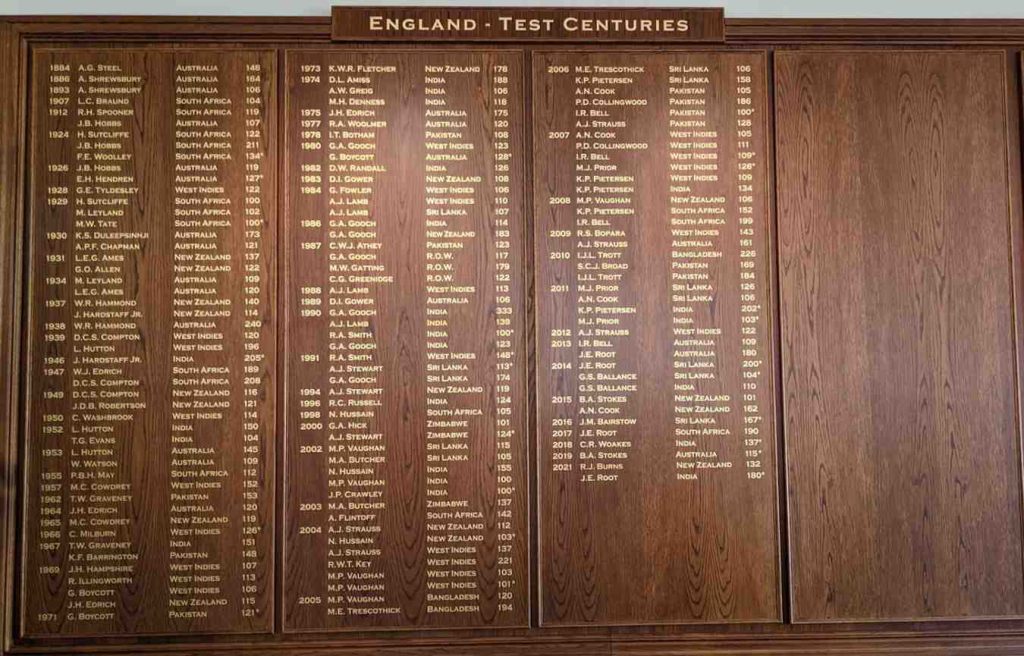
Graham Gooch scored 333 runs against India in 1990. This is the highest individual Test score at Lord’s. In that match, he scored a total of 456 runs in both innings, which was a record at that time.
6. Women’s Cricket
Lord’s hosted its first women’s Test match in 1976 between England and Australia. In 2017, the ICC Women’s World Cup Final was also played here. More than 26,000 people watched it, making it a very important moment for women’s cricket.
7. The Honours Board
Inside the Pavilion, there are honours boards in the dressing rooms. These boards show the names of players who scored a century or took five wickets in a Test match at Lord’s. Getting your name on this board is a big achievement.
8. The MCC Members’ Waitlist
Becoming a full member of MCC takes a long time. There are about 12,000 people waiting. The average waiting time is over 20 years. Around 18,000 full members and 5,500 associate members are part of MCC worldwide.
How Cricket Was Introduced to the World
Cricket spread across the world mainly because of the British Empire. As Britain expanded through the 17th, 18th, and 19th centuries, its soldiers, sailors, and officials took the game with them wherever they went.
By the early 1700s, cricket had already started being played in the American colonies. By the 1720s, it reached the Caribbean. Around 1721, British sailors brought cricket to India through the port of Cambay in Gujarat, where the game quickly grew in popularity.
Growth of Cricket Around the World
Australia played its first cricket match in 1877, with the arrival of the First Fleet. By the late 1800s, the game was well established in South Africa, New Zealand, and the West Indies.
The Marylebone Cricket Club, founded in 1787, became the main body that set and maintained the Laws of Cricket. These same laws, with small changes, still guide the game today.
The International Cricket Council, formed in 1909 as the Imperial Cricket Conference, now has 108 member nations. Today, cricket is the second most-watched sport in the world after football.
More Related Topics:
Conclusion: Lord’s Truly Stands As The Home of Cricket
Lord’s Cricket Ground is more than just a stadium. It is a place full of history and meaning. It all began in 1787 when Thomas Lord started it with a smart idea. Over time, the ground kept changing and improving. The modern Compton and Edrich Stands were completed in 2021, but the ground still feels the same at heart.
This is the place where the Laws of Cricket were written. The famous Ashes urn is kept here behind glass. For any player, having their name on the dressing room board here feels more special than winning many trophies.
Cricket spread across the world because of the empire, trade, and cultural exchange. But it found its true home on this gentle, sloping ground in north west London. And that is unlikely to change.