
The UK sports betting market is expanding rapidly as digital platforms, major sporting events, and evolving player behavior reshape the industry. The market is projected to reach $21.47 billion in revenue by 2030, nearly double its 2024 value, reflecting strong long-term demand and technological transformation.
This article explores key statistics, market growth trends, participation patterns, major betting companies, and the factors shaping the future of sports betting in the United Kingdom.
Top UK Sports Betting Statistics 2026
- The UK sports betting market is projected to reach $21.47 billion by 2030.
- The UK gambling industry generated £16.8 billion Gross Gambling Yield in 2025.
- About 48% of UK adults gambled in the previous four weeks.
- Online sports betting participation reached 8% of adults in 2025.
- The UK sports betting market generated £2.48 billion annual Gross Gambling Yield.
- 68% of UK gamblers expect increased betting during the 2026 sports calendar.
- William Hill captured 37.83% of sports betting PPC clicks.
UK Sports Betting Market Size
The UK sports betting market is on a sharp upward trajectory. By 2030, it’s projected to generate roughly $21,317.6 million in revenue, nearly double what the market produced in 2024.
Between 2025 and 2030, yields a compound annual growth rate of 11.4%, which is a notable pace of expansion for an already large and mature market.
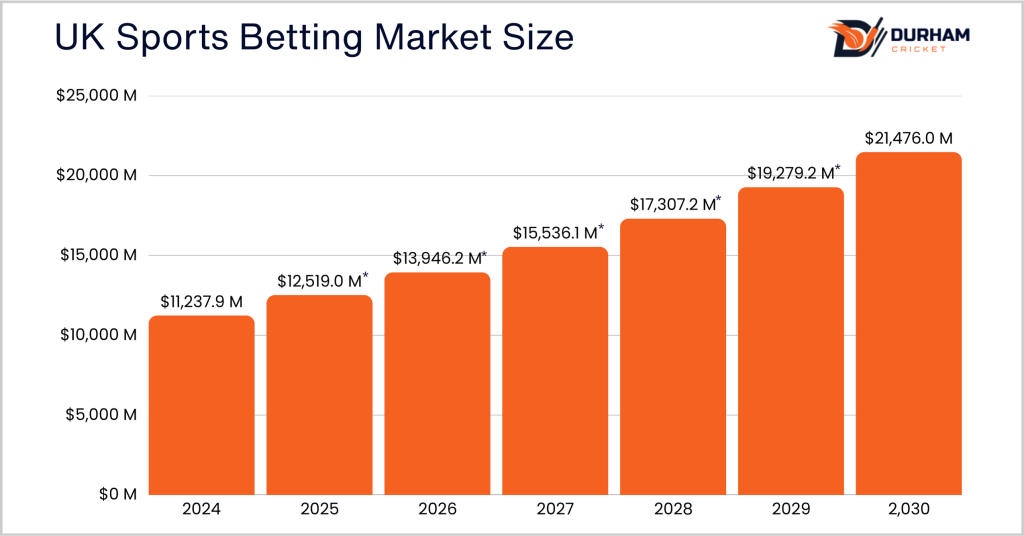
The table below shows how that growth is expected year by year:
| Year | Projected Revenue |
|---|---|
| 2024 | $11,237.9 million |
| 2025 | $12,519.0 million* |
| 2026 | $13,946.2 million* |
| 2027 | $15,536.1 million* |
| 2028 | $17,307.2 million* |
| 2029 | $19,279.2 million* |
| 2030 | $21,476.0 million |
*Estimated Figures
The UK sports betting market is on a sharp upward trend, supported by rising online wagering activity and increasing participation across sports such as football, tennis, and cricket. The growth of the cricket betting market has also contributed to overall betting revenue.
Sources: Grand View Horizon
UK Gambling Statistics
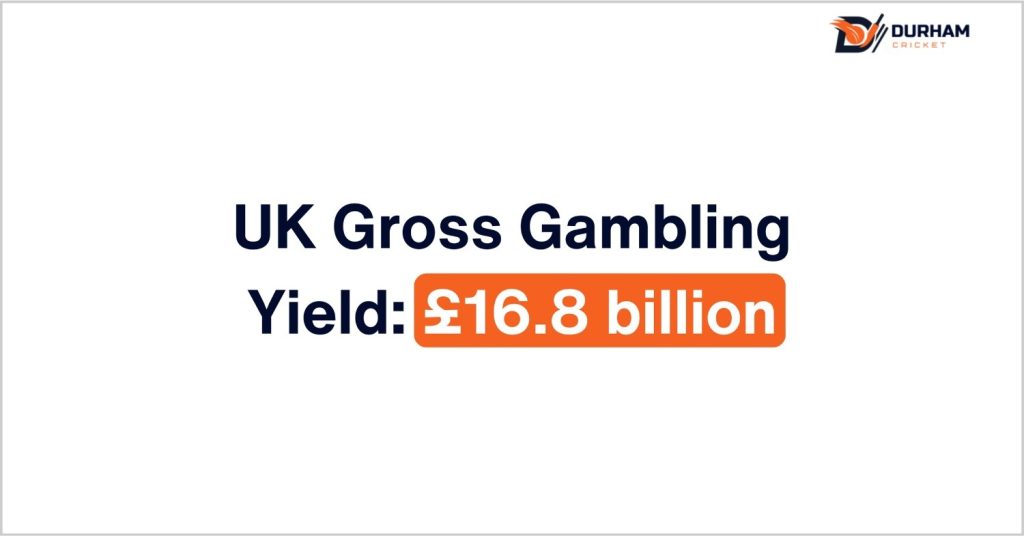
The scale of the UK gambling market is difficult to overstate. For the financial year April 2024 to March 2025, total Gross Gambling Yield across the customer-facing industry reached £16.8 billion, which clearly shows just how deeply embedded gambling is in British culture.
Quarterly data tells a similar story. Between July and September 2025, total GGY across the industry (including all reported lotteries) came to £4.3 billion.
Strip out lotteries, and the figure is still £3.2 billion, confirming that non-lottery activities account for the bulk of industry revenue.
Within that period, the Remote Casino, Betting and Bingo (RCBB) sector generated £2.0 billion in GGY. Online casino games alone were responsible for £1.4 billion of that, 69.9% of the RCBB total, underlining the dominance of digital platforms over land-based venues.
Land-based sectors (Arcades, Betting, Bingo, and Casino combined) produced £1.2 billion over the same stretch, a meaningful contribution but a smaller one by comparison.
Participation figures are equally telling. As of October 2025, 48% of UK adults had gambled in some form in the preceding four weeks.
When lottery-only players are removed from that count, the rate falls to 27%, meaning roughly 21% of the adult population participates exclusively in the National Lottery draw and nothing else.
Online gambling participation sat at 39% in the same period, dropping to 16% once lottery-only players are excluded.
In-person participation was 28%, with 17% engaging in non-lottery activities, suggesting that physical venues still attract a significant share of the public despite the ongoing digital shift.
Age patterns are worth noting. Participation peaks among those aged 45 to 64, where rates hit 55-56%.
But when lotteries are taken out of the equation, it’s the 25-34 age group that leads at 35%, pointing to a younger demographic driving the more intensive forms of gambling.
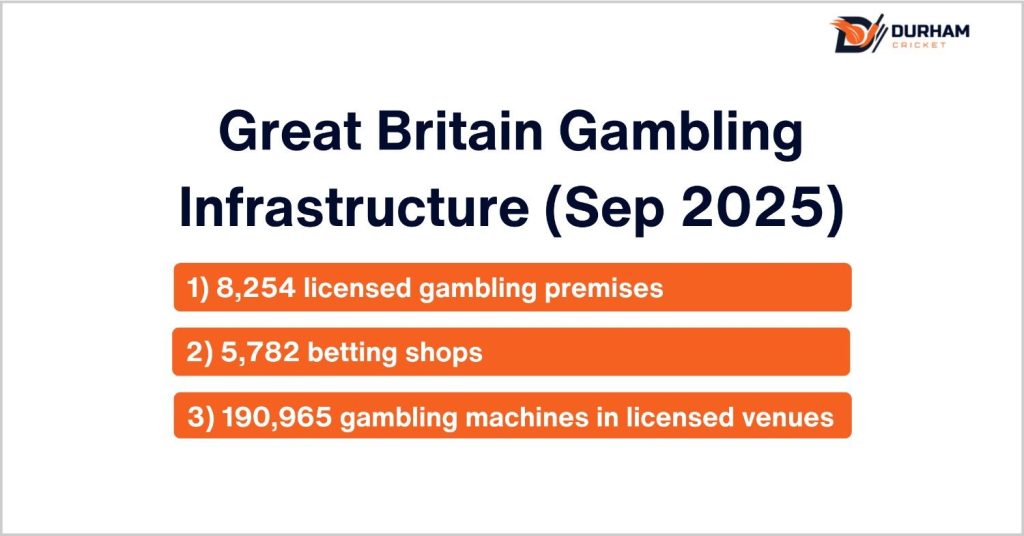
On the physical infrastructure side, Great Britain had 8,254 licensed gambling premises as of September 2025, with 5,782 of these being betting shops. There were also 190,965 gambling machines in licensed premises across the country.
Meanwhile, National Lottery contributions to good causes totalled £402.9 million between July and September 2025, with large society lotteries adding a further £122.4 million.
Sources: Gambling Commission 1, Gambling Commission 2, Gambling Commission 3
Sports Betting in The UK Key Statistics
As of early 2026, the UK sports betting market generated approximately £2.48 billion ($3.3 billion) in annual Gross Gambling Yield, placing it among the largest regulated sports wagering markets in the world.
Non-remote (land-based) betting GGY stood at £592 million for July to September 2025, representing 48.2% of the total non-remote gambling yield during that quarter.
Physical betting shops clearly retain a bigger share of the market than their digital counterparts’ narrative might suggest.
Online sports betting participation reached 8% of the adult population in 2025, reflecting the growing popularity of digital betting platforms where users can easily place wagers and understand betting odds across different sporting events.
Overall betting participation (in-person and online combined) was 10%, though there’s a pronounced gender gap: 16% of men reported betting in that period versus just 4% of women.
Horse race betting participation came in at 4% for the four weeks to October 2025, down from 7% in the prior quarter (April to July 2025). The drop is consistent with the seasonal absence of major racing events like Royal Ascot that tend to spike participation.
Looking ahead, approximately 68% of UK gamblers surveyed in February 2026 said they expect to increase their betting activity during the 2026 sports calendar, largely driven by the FIFA World Cup.
Online GGY for the remote sector (including betting) rose 8% year-on-year to £1.42 billion in Q2 2025, a figure that reflects the sustained migration of punters toward mobile and digital platforms.
Sources: Yogonet 2, Yogonet 1, Gambling Commission 3, Gambling Commission 2, Sigma
Biggest Bookmakers and Betting Companies in the UK
Flutter Entertainment, parent company of Sky Bet and Paddy Power, posted group revenue of $15.91 billion for the full year 2025, up 17% from 2024. It remains comfortably the market leader.
Adjusted EBITDA climbed 21% to $2.85 billion in the same period, and average monthly players grew by 14%, pointing to both profitability and an expanding user base despite mounting regulatory and tax pressures.
Entain PLC, which operates Ladbrokes and Coral, reported group net gaming revenue of £5.3 billion in 2025.
Its UK & Ireland online division saw volume grow by 15%, though UK retail revenue slipped 2%, consistent with the broader industry pattern of customers gravitating toward digital over physical.
Entain also reported a widened after-tax loss of £681 million ($867 million) for 2025, partly due to a £488 million impairment charge connected to UK tax and regulatory changes.
William Hill holds the strongest brand presence in UK search, capturing 37.83% of sports betting PPC click-throughs as of February 2026. Bet365 follows at 16.2%, supported by its extensive live-streaming and in-play betting features.
The full click share breakdown is listed below:
| Brand | Share of Clicks |
|---|---|
| williamhill.com | 37.83% |
| bet365.com | 16.20% |
| ladbrokes.com | 14.42% |
| skybet.com | 10.44% |
| coral.co.uk | 3.58% |
| paddypower.com | 2.78% |
| betfred.com | 2.29% |
| boylesports.com | 2.12% |
| betfair.com | 1.82% |
| betway.com | 0.91% |
| others | 7.61% |
The National Lottery ranked as the most popular gambling brand in the UK during Q4 2025, reflecting its wide appeal across demographic groups in a way that no private operator has yet matched.
Sources: Flutter, Entain, Adthena, Morning Star, Global News Wire
Key Drivers of the UK Sports Betting Industry
Several forces are pushing the market forward at a pace, and understanding them together gives a clearer picture of why growth projections remain robust.
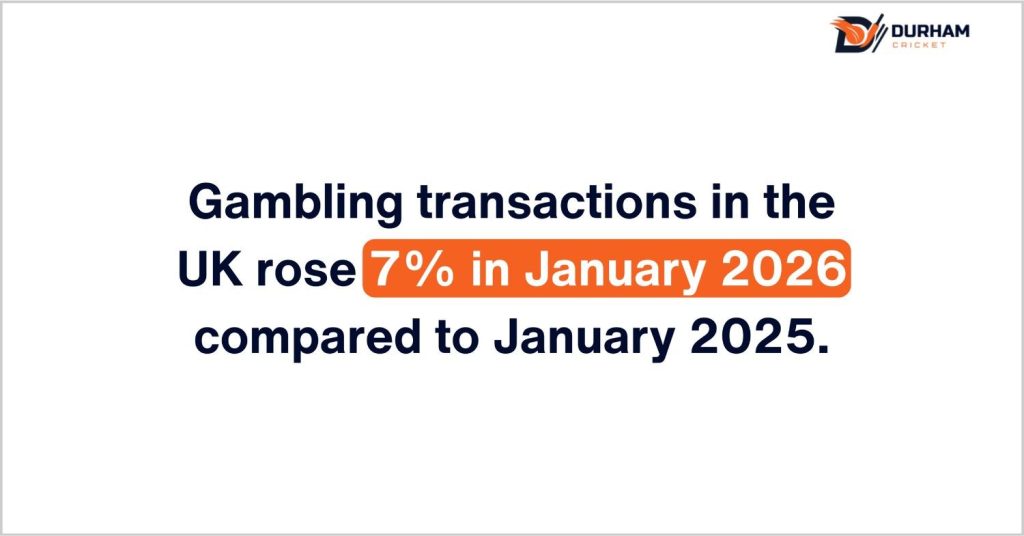
Major sporting events remain one of the most reliable catalysts. Gambling transactions in the UK rose 7% in January 2026 compared to the same month a year earlier, driven by consumer anticipation for a packed 2026 sports calendar.
Artificial intelligence is accelerating change across the industry. The global AI sports betting market is projected to expand from $10.8 billion in 2025 to over $60 billion by 2034, a trajectory fuelled by personalized user experiences and real-time data analytics that weren’t possible even five years ago.
The gamification of betting apps is another factor. By incorporating social features and interactive elements, operators are successfully drawing in younger users; the 25-34 age group posted the highest non-lottery gambling participation rate at 35% in late 2025.
Live in-play betting has become a critical revenue stream, with 5G connectivity allowing near-instantaneous odds updates and bet placement during live broadcasts.
Strategic marketing and sponsorship activity, particularly in professional football, sustains high brand visibility. William Hill and Bet365 alone captured over 50% of UK sports betting search click share in early 2026.
Major sporting events remain one of the most reliable catalysts for betting activity, with tournaments and series such as international football competitions and major cricket events like the Ashes driving spikes in wagers across leading betting platforms.
The ongoing shift toward a cashless society is also smoothing the path for digital gambling spend. Data from Nationwide Building Society showed a consistent rise in digital gambling transactions throughout early 2026.
Sources: Yogonet, WSC, Gambling Commission 3, Adthena
Challenges Facing the UK Sports Betting Industry
The industry’s growth story comes with a considerable list of headwinds, several of which are already materialising.
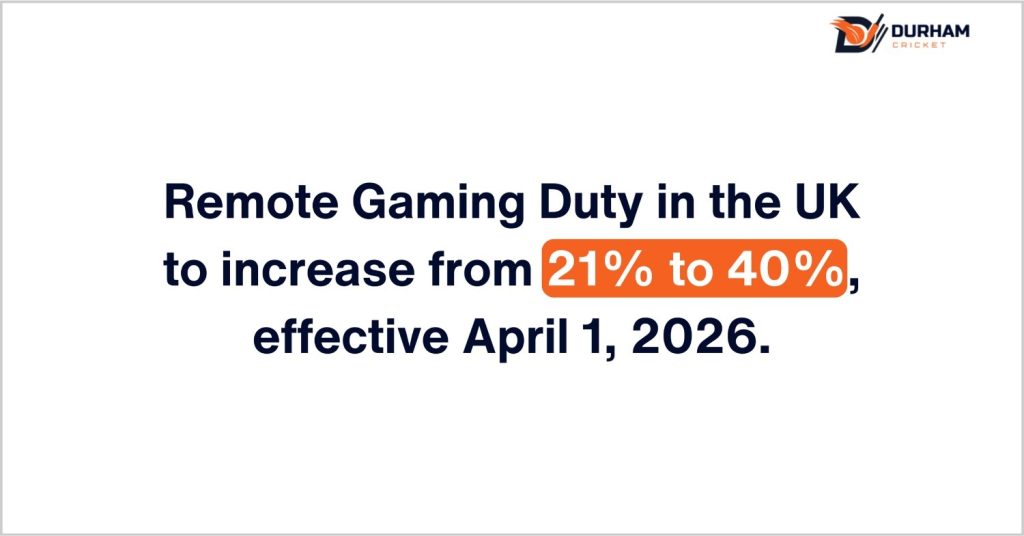
The most immediate fiscal pressure is the increase in Remote Gaming Duty from 21% to 40%, effective April 1, 2026. For online operators, this represents a dramatic shift in their cost base and has already begun to change financial planning across the sector.
Entain’s £681 million after-tax loss in 2025, partly attributed to a £488 million impairment charge linked to UK tax and regulatory changes, is an early illustration of the financial strain that larger players are already absorbing.
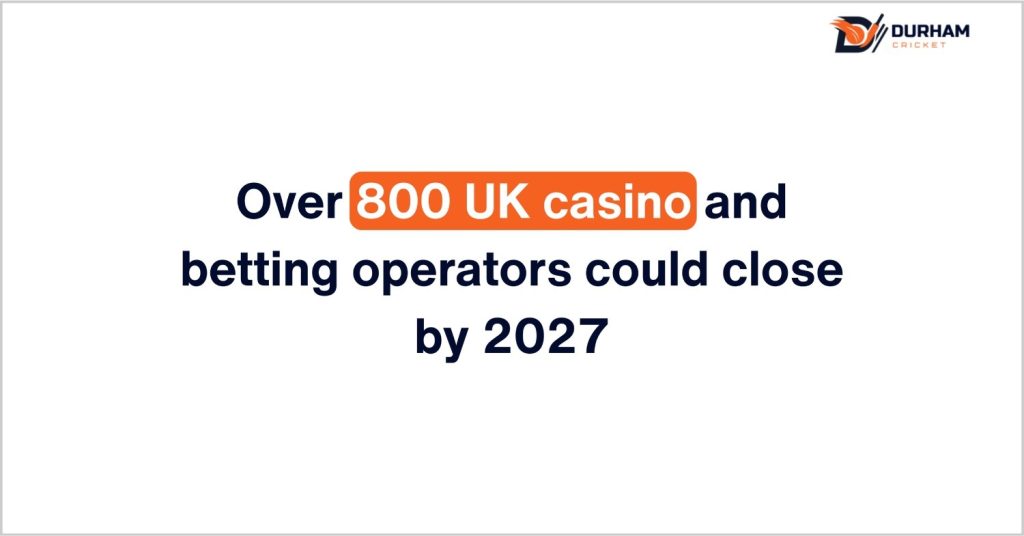
At the market-structure level, the regulatory tightening is expected to drive consolidation. One study estimates that over 800 UK casino and betting operators could close by 2027 as a direct result of the 2026 regulatory shifts.
There is also a risk that stricter affordability checks and higher taxes push consumers toward unregulated black-market alternatives, a concern that regulators themselves have acknowledged, since enforcement against illegal operators is far harder than regulating licensed ones.
Gambling harm remains a core social concern. A February 2026 survey of 2,000 gamblers flagged increasing risks ahead of the 2026 sports calendar, adding pressure on operators to demonstrate responsible gambling credentials.
Operational costs are rising too. The implementation of mandatory financial vulnerability checks is expected to cost companies like Rank Group approximately £4 million per year.
Public sentiment hasn’t shifted in the industry’s favour either. Following reports that gambling firms made an extra £1 billion from online casino players in the 12 months to March 2025, 15% of the public are calling for tax rates to go even higher.
Revenue concentration is a further vulnerability. The top 10% of UK spenders wagered an average of £745 per month as of early 2026, meaning a significant portion of industry income is derived from a small group of potentially vulnerable users, a dynamic that regulators are watching closely.
Even the largest operators aren’t immune to disruption. Bet365 reported a revenue dip in early 2026, illustrating that market leadership doesn’t insulate firms from shifting economic conditions and regulatory headwinds.
Sources: UK GOV, Tribuna, Yahoo Finance, Yogonet, iGB, The Guardian, Sigma
Future Outlook For the UK Sports Betting Market
Despite the pressures, the medium-term outlook remains broadly positive, with several identifiable growth levers on the horizon.
The 2026 FIFA World Cup is the single biggest near-term catalyst. Surveys suggest that 70% of football fans plan to place a wager during the tournament, which could bring a record number of first-time bettors into the regulated market.
Online gambling revenue in the UK is forecast to reach $15.09 billion by 2030, growing at a CAGR of 12.8% as digital platforms continue to widen their lead over traditional retail channels.
Prediction markets are emerging as a notable trend for 2026. New exchanges are launching in the UK to capture growing interest in event-based wagering that extends well beyond conventional sports outcomes.
Hyper-personalization is where the technology conversation is heading. AI-driven platforms are expected to lift user engagement meaningfully by delivering real-time, customized betting recommendations during live broadcasts, a capability that is still in its early stages but is developing rapidly.
Regulatory scrutiny of advertising is likely to intensify as the World Cup approaches, particularly following research showing that betting frequency rises by up to 24% during matches broadcast on channels carrying gambling ads.
Prop markets and micro-betting are also expected to surge during the 2026 World Cup, driven by the format’s fast-paced, interactive nature, a good fit for a generation of bettors accustomed to real-time digital experiences.