
The Pakistan Super League has announced a salary cap increase to $1.6 million per team for the 2026 season, alongside expansion to eight franchises and the introduction of an auction system for the first time. Despite these reforms, the financial chasm between the PSL and IPL remains staggering. The IPL’s two highest-paid players, Rishabh Pant and Shreyas Iyer, earn Rs. 27 crore and Rs. 26.75 crore respectively, nearly double what an entire PSL team can spend on its complete squad.
IPL vs PSL Numbers Tell The Story
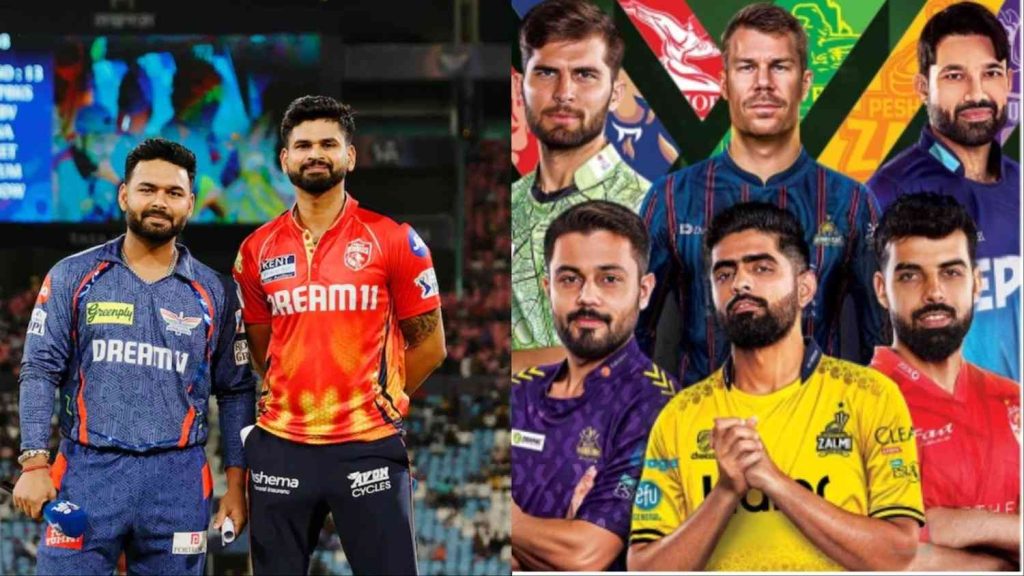
The Pakistan Cricket Board raised the salary cap from $1.3 million to $1.6 million (approximately Rs.14.5 crore) per team, with eight franchises collectively spending a maximum of $12.8 million (Rs. 116.48 crore). While this represents progress, the IPL operates on an entirely different scale. Each IPL franchise has a salary cap of Rs. 125 crore, 758.5% higher than the PSL’s per-team budget. Put simply, one IPL team can spend 8.6 times more than a PSL team.
The disparity becomes even more pronounced when comparing total league spending. The 10 IPL teams combined will spend Rs. 1,250 crore on player salaries in 2026, which is 973.1% higher, or 10.7 times more than the PSL’s total spending of Rs. 116.48 crore across eight teams.
Historical Context Highlights The Gap
Even in 2008, the first IPL auction saw MS Dhoni command $1.5 million, nearly matching what an entire PSL team can spend in 2026. The inaugural IPL season had a per-team cap of $5 million, far exceeding the PSL’s current budget nearly two decades later.
While the PSL’s reforms signal ambition and progress, the league still operates in a fundamentally different financial universe compared to cricket’s most lucrative competition. The IPL’s massive media rights deals, sponsorships, and global viewership create revenue streams the PSL simply cannot match, leaving it far behind in the race for cricket’s top talent.